AI/ML
Apr 24

For the past two years, most enterprise AI conversations have been dominated by chat interfaces, productivity demos, and a steady stream of inflated claims. Security leaders have heard every version of the pitch: faster analysts, smarter automation, autonomous response, AI-native everything.
In the Security Operations Center (SOC), however, the real question is not whether AI is interesting. It is whether AI can be trusted inside a high-stakes operational environment where bad decisions affect production systems, customer data, and business continuity.
That is why cybersecurity is one of the clearest places to see the next phase of enterprise AI adoption. In the SOC, AI either becomes governed infrastructure or it remains a risky experiment.
At SofectaLabs, that distinction matters. We do not treat AI as a flashy add-on to an MDR service. We treat it as a controlled operational layer that helps our expert-led SOC triage faster, hunt more effectively, and deliver more predictable Managed Detection and Response outcomes without surrendering security, accountability, or judgment.
Enterprise AI adoption is real, even if scaling is uneven. The strongest market evidence does not support the idea that every enterprise is already fully transformed. But it does support a clear shift: AI is moving from isolated pilots into core operational workflows.
This shift is highly visible across both infrastructure and security operations:
This matters because the SOC is where enterprise AI stops being abstract. A security team does not get to hide behind a nice demo if the system creates noise, mishandles a response step, or acts without proper controls. In cybersecurity, the gap between “impressive” and “deployable” is defined by governance.
The market has learned this the hard way. MIT NANDA reports that 95% of organizations see no measurable return from their GenAI efforts. The issue is not simply that the models are weak. The bigger problem is operational fit, often characterized by:
The same pattern shows up in security. Teams do not need another disconnected AI surface that generates text but adds no operational clarity. They need systems that reduce alert fatigue, structure decisions, and move routine work out of the analyst’s critical path without introducing new risk.
That is why generic AI adoption and AI-driven MDR are not the same thing. Buying access to a model does not create a modern SOC. Building governed workflows around real detections, real telemetry, and real response controls does.
For MDR buyers, this is the practical dividing line. The question is not, “Does your provider use AI?” The real question is, “How is that AI governed, where does it sit in the workflow, and what measurable service outcomes does it improve?”
If you want to see what mature enterprise AI looks like, highly regulated environments are a good place to start. Financial institutions, healthcare organizations, and operators of critical services do not have the luxury of casual experimentation. They need privacy, auditability, access control, and clear responsibility built into the operating model from the beginning.
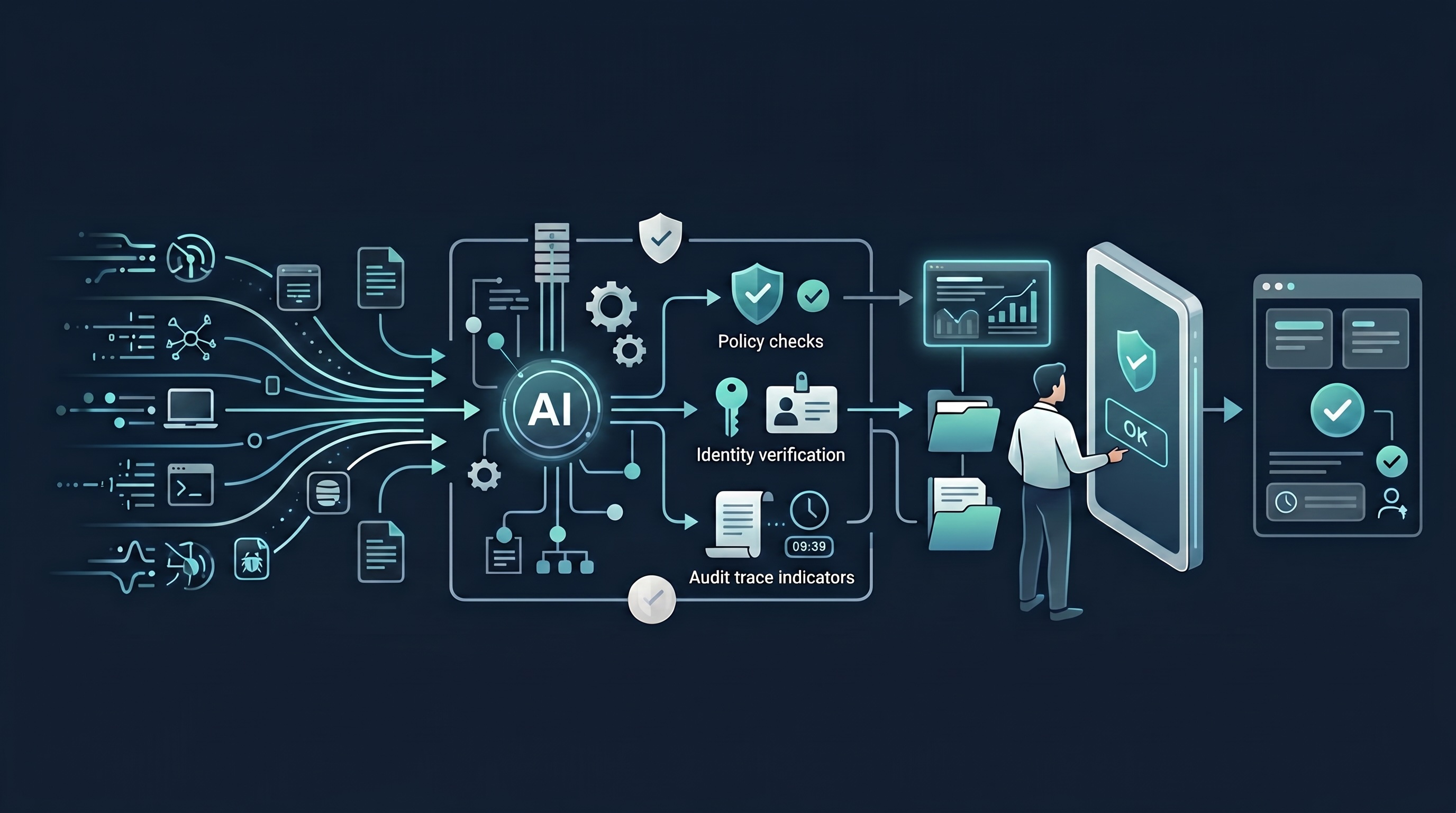
That is why the modern SOC is becoming a blueprint for governed AI. When AI systems interact with identities, endpoint telemetry, vulnerability data, and response tools, they must operate inside strict boundaries. This requires:
Signed service identities and short-lived credentials
Leading enterprises are already moving in this direction. Capital One, a major U.S. financial institution, describes its multi-agentic AI adoption as balancing innovation with well-governed, risk-centered approaches. In its public materials, the company points to rigorous validation frameworks, plan validation before action, and governance controls that keep identity, access control, and policy enforcement in the orchestration layer rather than leaving them to the model itself.
In a podcast discussion, Samsara, a connected-operations software company, described a centralized “AI Gateway” that gives product engineers access to multiple LLMs while shifting security, compliance, and cost management into a shared control layer. The broader lesson is more important than the product label: enterprise AI becomes credible when model access is standardized, governed, and observable instead of being improvised team by team.
The same logic applies directly to cybersecurity workflows. An AI system can help enrich alerts, correlate evidence, summarize likely attack paths, and prioritize response actions. But if it cannot be constrained, reviewed, and audited, it does not belong near a production SOC.
This is where SofectaLabs’ position should be understood clearly. We are not selling an AI gateway as a standalone software product. We are delivering MDR, and governed AI is part of the operating model that makes that MDR faster, more consistent, and more scalable.
Our public site already reflects that structure. SofectaLabs leads with Managed Detection and Response, expert-led SOC operations, proactive threat hunting, identity protection, SOAR automation, and managed observability. AI is present, but as an enabling layer that helps security professionals investigate in parallel, enrich alerts, and execute tightly controlled response actions.
That distinction is important. Customers do not come to SofectaLabs to run an AI experiment. They come to reduce noise, improve detection quality, accelerate triage, and get a service they can trust. Governed AI is what helps us do that without asking every customer to build their own internal AI control plane.
In practical terms, this means our AI layer is not given open-ended freedom. It operates through:
When AI helps structure an investigation, the output is tied back to the underlying telemetry and made visible to the analyst responsible for the decision.
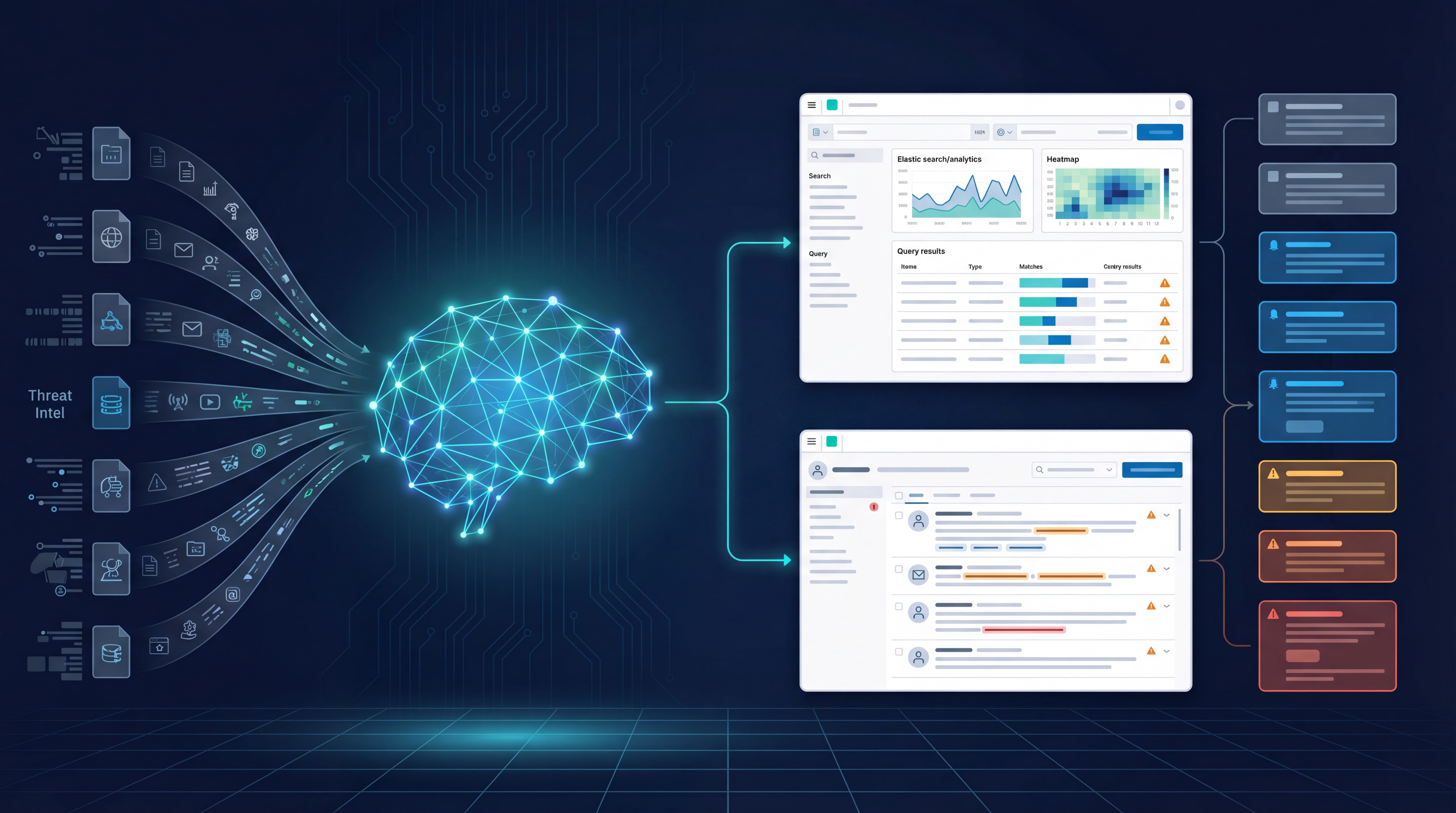
In practice, this is also visible in how SofectaLabs uses governed AI workflows for case triage and threat hunting. Multi-step AI routines can enrich alerts, correlate related signals, summarize likely attack paths, and prepare structured investigation outputs before an analyst makes the final decision. The point is not autonomy for its own sake. The point is faster, more consistent MDR execution with human judgment preserved where it matters.
Consider a straightforward SOC example. Our AI correlates multiple signals and determines that a host is likely compromised and should be isolated from the network. In the SofectaLabs platform, the model does not have direct access to the isolation control itself. The request moves through an approved workflow, the service identity is verified, the evidence is compiled against the original telemetry, and the analyst sees a clear logic chain before any high-risk action is authorized. The host isolation occurs only when the analyst explicitly approves it.
That is what “AI-driven MDR” should mean in practice: not unsupervised autonomy, but governed acceleration. The result is not only speed. It is lower operational noise, better analyst focus, and a more predictable service model for the customer.
This is also what makes our Human-in-the-Loop model operationally credible. In a real SOC, human expertise is not a cost to eliminate. It is the layer that handles edge cases, business context, and final accountability. AI does what machines do best: process large volumes of telemetry, structure evidence, and remove repetitive enrichment work from the analyst’s path. Our experts do what they do best: assess nuance, challenge assumptions, and make defensible decisions under pressure. That combination is what allows SofectaLabs to deliver MDR that is faster and more scalable while remaining fundamentally expert-led.
Boards, executives, and customers are all pushing organizations toward AI adoption. At the same time, the regulatory environment is tightening. The EU AI Act is moving AI governance out of the “future concern” category and into the current operating model. Standards such as ISO 42001 are reinforcing the expectation that AI systems should be managed with traceability, accountability, and controls.
For many CISOs and IT leaders, this creates a real tension. They know they cannot ignore AI. They also know that bolting AI onto security workflows without governance is a new way to create risk, compliance exposure, and operational instability.
That tension is exactly where SofectaLabs can lead. The practical message to the market is not “everyone should build an AI-native SOC from scratch.” The practical message is that governed AI is becoming the new standard, and customers need a partner that can operationalize it safely inside a real MDR service.
That is the opportunity. Done properly, AI helps make MDR faster, more reliable, and more cost-predictable. Done badly, it creates a more complicated, less accountable security stack.
The most important shift in enterprise AI is not the model race. It is the move from experimentation to governed operations.
Cybersecurity is one of the clearest places where that shift is already visible. The SOC cannot tolerate vague promises, opaque workflows, or uncontrolled autonomy. It demands guardrails, observability, explicit control points, and accountable human oversight.
SofectaLabs is building in that reality, not waiting for it. Our MDR service combines expert-led operations with governed AI workflows for triage, investigation, and hunting so customers get the benefit of modern AI without inheriting the burden of building and governing it themselves.
That is what the market needs to understand now: AI in cybersecurity is no longer about demos. It is about delivering trusted, measurable, enterprise-grade outcomes. And the companies that treat AI as a governed operational backbone, rather than a marketing slogan, will define the next standard for MDR.


.png)

